
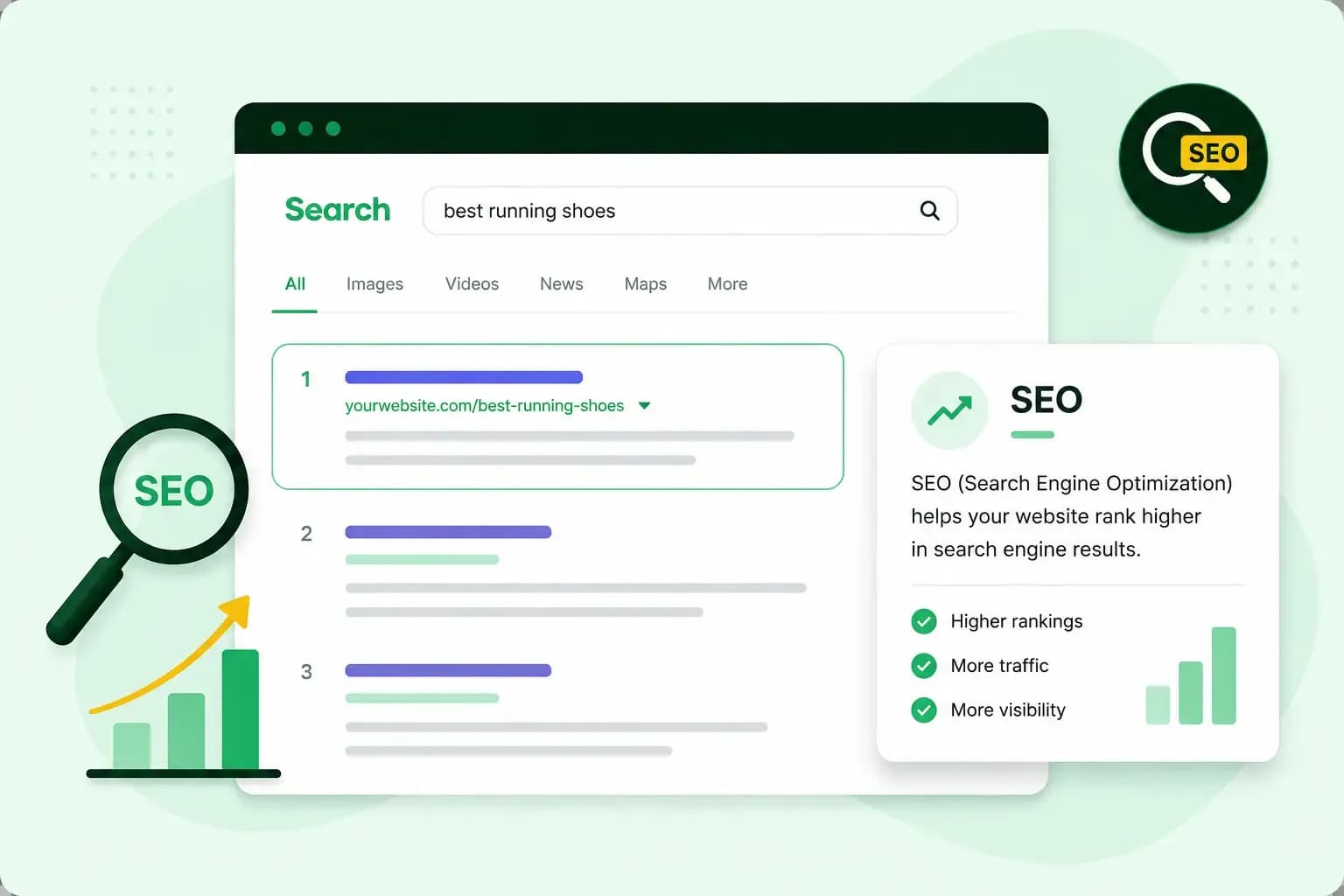
Free Search Engine Optimisation: A Practical Guide
Free search engine optimisation (SEO) is the process of improving a website’s visibility in search results without paying for advertising or expensive software. It takes time and consistent effort, but many important SEO tasks can be done using free tools and straightforward techniques.
SEO cannot guarantee a particular ranking. Search engines consider many factors, and results can change over time. However, by making your website useful, accessible and easy to understand, you can improve the chances that the right people will find it.
Start with your audience
Before changing your website, think about what your visitors are looking for. What questions do they ask? What problems are they trying to solve? A useful page should answer those questions clearly and accurately.
Make a list of the topics your customers care about and the words they might use when searching. Free suggestions can be found by observing search-engine autocomplete, related searches and the questions shown in results pages. These are useful starting points, but they should be checked against your knowledge of your audience.
Use keywords naturally
Once you understand a page’s topic, choose a main search phrase and a few closely related terms. Include them naturally in the page title, main heading, introduction and relevant subheadings. Use clear language throughout the page rather than repeating the same phrase unnecessarily.
There is no benefit in stuffing a page with keywords. It can make the content difficult to read and may undermine visitors’ trust. Write for people first, using the terms they are likely to recognise.
Create helpful, original content
Strong content is at the heart of sustainable SEO. Aim to publish pages that offer genuine value, answer a specific question or explain a subject in a useful way. Make information easy to scan with descriptive headings, short paragraphs and relevant examples.
Review existing pages as well as creating new ones. Update outdated details, remove duplication and improve pages that are too thin to be useful. If a page no longer serves a purpose, consider whether it should be updated, redirected or removed.
Improve page titles and descriptions
Each important page should have a distinctive, descriptive title. A good title tells people what the page is about and gives them a reason to visit. Keep it concise enough to be understood at a glance, and avoid repeating keywords unnaturally.
A meta description is a short summary that may appear beneath a page title in search results. It does not guarantee a higher ranking, and search engines may display different text instead. Still, a clear and accurate description can help people decide whether the page is relevant to them.
Make your website easy to use
Visitors should be able to navigate your website without confusion. Use a clear menu, descriptive links and a logical page structure. Each page should have one main heading, followed by subheadings that organise the information.
Check that your website works well on mobile devices. Pages should be readable without zooming, links should be easy to tap, and important information should not be hidden behind awkward layouts. A fast, dependable website also makes for a better visitor experience.
Use free SEO tools
Several free tools can help you understand how your website performs:
- Google Search Console can show which searches bring people to your site, highlight indexing issues and report certain technical problems.
- Google Analytics can help you understand how visitors use your website, subject to appropriate consent and privacy requirements.
- Bing Webmaster Tools offers search-performance and website diagnostics for Bing.
- PageSpeed Insights can identify performance issues and suggest improvements for individual pages.
- Free browser tools can help check page titles, headings, mobile layouts and accessibility basics.
Free tools often have limits, and their recommendations should be treated as guidance rather than instructions to follow blindly. Focus on issues that affect your visitors and your ability to be found.
Check the technical basics
Search engines need to be able to discover and understand your pages. Check that important pages are not accidentally blocked from crawling, that links work and that your site uses secure HTTPS. A sitemap can help search engines discover pages, while a robots.txt file can give crawlers directions about which areas to access.
Use simple, descriptive web addresses where possible. For example, a page about delivery information is easier to understand at example.co.uk/delivery than at a long address filled with unclear characters. Avoid changing established URLs without a good reason; if a URL must change, set up a suitable redirect.
Build trust and earn relevant links
Links from other websites can help people discover your content and provide useful context to search engines. Instead of buying links or joining schemes that promise quick rankings, focus on earning genuine mentions. You might publish a useful resource, contribute to a relevant local organisation or provide information that other websites have a reason to reference.
Make your business details consistent across your website and relevant online directories. For local businesses, keep the address, telephone number and opening hours accurate, and maintain an up-to-date Google Business Profile where eligible. Encourage honest customer reviews, but do not pressure people to leave a particular rating.
Measure progress patiently
SEO is a long-term activity, not a quick fix. Use Search Console or another suitable tool to review impressions, clicks, search queries and indexing. Look for trends over time rather than expecting immediate changes after every edit.
Prioritise improvements that are useful to visitors: clearer information, better navigation, faster pages and more complete answers. Review what is working, make sensible changes and give search engines time to recrawl and reassess your pages.
Free SEO is an investment of time
Free search engine optimisation does not mean effortless optimisation. You may not need to pay for premium software or advertising to make meaningful progress, but you will need patience, attention to detail and a commitment to publishing useful information.
Start with the basics: understand your audience, improve your content, make your site easy to use and monitor its performance. These practical steps can help build a stronger foundation for search visibility without relying on costly tools or unrealistic promises.
Top 5 Free Tips for Effective Search Engine Optimisation
- Use free keyword tools to find relevant search terms.
- Write clear page titles and meta descriptions.
- Create helpful, original content for your audience.
- Add descriptive alt text to images.
- Use Google Search Console to monitor performance.
Use free keyword tools to find relevant search terms.
Use free keyword tools to discover the words and phrases people search for in your area of expertise. Tools such as Google Keyword Planner, Google Trends and the suggestions shown in search results can help you spot relevant topics and understand how interest changes over time. Choose terms that match your audience’s needs, then use them naturally in useful page titles, headings and content. Avoid keyword stuffing: clear, helpful writing is more valuable than repeating phrases just to influence rankings.
Write clear page titles and meta descriptions.
Write a clear, unique page title and meta description for every important page on your website. The title should briefly describe the page and include its main topic naturally, while the description should give searchers an accurate, appealing summary of what they’ll find. Keep both concise and avoid cramming in keywords. Search engines may rewrite titles or descriptions in results, but well-written ones can still help visitors understand your page and decide whether it’s relevant.
Create helpful, original content for your audience.
Create helpful, original content that answers your audience’s questions and meets their needs. Share clear, accurate information, practical advice or insights based on your experience, and organise it with descriptive headings so it is easy to read. Avoid copying other websites or repeating keywords unnaturally; content written for people is more likely to earn trust, encourage visitors to stay and give search engines a clearer understanding of your pages.
Add descriptive alt text to images.
Add descriptive alt text to images so visitors using screen readers can understand what each image shows, and search engines can better interpret its context. Keep the description concise and specific, focusing on the image’s purpose rather than cramming in keywords. For decorative images that add no useful information, use empty alt text so assistive technology can skip them.
Use Google Search Console to monitor performance.
Use Google Search Console to monitor how your website performs in Google Search. This free tool shows which search queries bring visitors to your pages, how often your pages appear in results and how many people click through. It can also highlight indexing issues and technical problems that may affect visibility. Check the reports regularly to spot trends, identify pages that could be improved and understand whether your SEO changes are making a difference.