
SEO and Social Media Marketing: How They Work Together
Search engine optimisation (SEO) and social media marketing are often treated as separate parts of a digital marketing strategy. In practice, they can support one another. SEO helps people find useful content through search engines, while social media helps that content reach and engage an audience. Used together, they can strengthen a brand’s visibility and build lasting relationships with customers.
What is SEO?
SEO is the process of improving a website so that it is easier for search engines to understand and more useful to visitors. It can include creating relevant content, improving page titles and headings, making a site easier to navigate, and ensuring that pages load well on mobile devices.
Good SEO is not simply about repeating keywords. It starts with understanding what people are looking for and providing clear, accurate information that meets their needs. A well-optimised page should be helpful to readers as well as easy for search engines to interpret.
What is social media marketing?
Social media marketing involves using platforms such as Instagram, Facebook, LinkedIn, TikTok and YouTube to share content, communicate with audiences and promote a business. The right platforms depend on the audience and the type of content being created. A strong social presence is built through relevant, consistent posts and genuine interaction—not just frequent promotion.
How social media can support SEO
Social media activity is not generally a direct ranking factor in search results. However, it can help SEO indirectly in several important ways:
- Increasing content visibility: Sharing articles, guides and videos can introduce them to people who may not otherwise find them.
- Attracting website visits: Social posts can encourage interested users to visit relevant pages on a website.
- Building brand recognition: Regular, useful content can make a brand more familiar, which may lead people to search for it by name.
- Creating opportunities for links: Content that is shared widely may attract the attention of publishers, bloggers or other websites. Some may choose to link to it, which can benefit SEO.
- Understanding audience interests: Comments, shares and questions can reveal the topics people care about, helping inform future website content.
How SEO can strengthen social media
SEO research can also make social media marketing more effective. Search queries reveal the questions and problems people are trying to solve. These insights can inspire social posts, short videos and discussions that are more relevant to an audience.
Search-friendly content can also provide a steady source of material for social channels. A detailed article, for example, can be adapted into several posts, a short video, an infographic or a set of practical tips. This helps businesses make more use of the work that goes into creating valuable content.
Practical ways to bring the two together
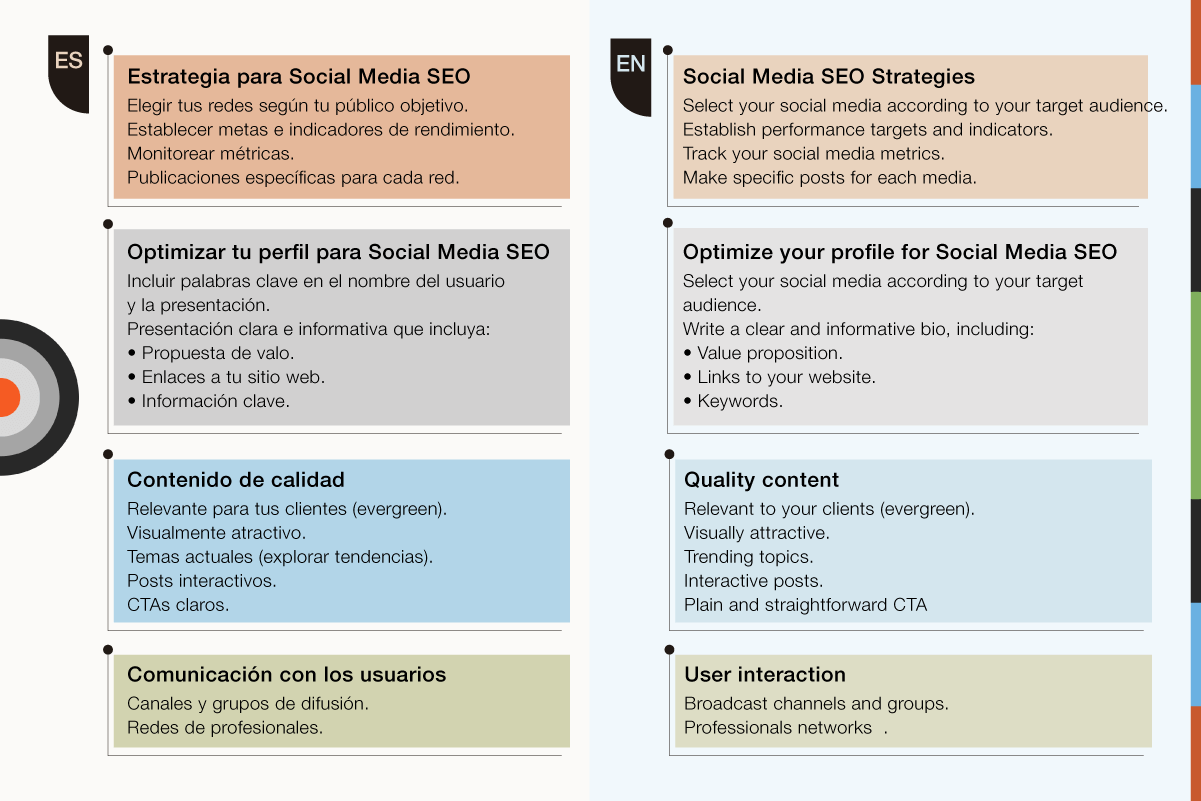
- Research topics before creating content. Use keyword research, customer questions and social media discussions to identify subjects that matter to your audience.
- Create useful, original material. Focus on answering real questions clearly. Avoid producing content solely to target search terms or fill a posting schedule.
- Optimise the website page. Use a clear page title, descriptive headings, readable paragraphs and relevant internal links. Make sure the page works well on mobile.
- Share content with context. When posting a link, explain why it may be useful and tailor the message to the platform. A copied headline alone is less likely to encourage meaningful engagement.
- Adapt content for each channel. Turn key points into short posts, clips or visuals rather than publishing the same format everywhere.
- Make sharing easy. Use clear page layouts and descriptive images. Where appropriate, include social sharing options and accurate preview information.
- Measure results across channels. Track organic search visibility, website visits, engagement, enquiries and sales. Use tagged links where suitable to identify visits from social campaigns.
Common mistakes to avoid
One common mistake is expecting a popular social post to immediately improve search rankings. Social engagement can increase reach, but it does not guarantee higher positions in search results. Another is focusing on follower numbers rather than meaningful outcomes, such as relevant website visits, enquiries or repeat engagement.
It is also important not to publish low-quality content simply to maintain a high posting frequency. A smaller number of well-researched, useful resources is often more valuable than a large volume of repetitive posts. Finally, avoid using the same message on every platform without considering the audience, format and tone that work best there.
Conclusion
SEO and social media marketing have different roles, but they are most effective when planned together. SEO helps people discover useful information through search, while social media helps that information travel further and encourages conversation. By combining audience research, helpful content and thoughtful measurement, businesses can build a more consistent and effective digital marketing strategy.
Exploring SEO and Social Media Marketing: Key Differences, Synergies, and Best Practices
- What is the difference between SEO and social media marketing?
- Does social media marketing help SEO rankings?
- How can SEO and social media marketing work together?
- Which social media platforms are best for promoting SEO content?
- How often should a business post on social media to support its marketing goals?
- How can keyword research improve social media content?
- How do you measure the success of SEO and social media marketing?
- How long does it take to see results from SEO and social media marketing?
What is the difference between SEO and social media marketing?
SEO focuses on improving your website’s visibility in search engine results, helping people find your business when they search for relevant products, services or information. Social media marketing uses platforms such as Instagram, Facebook and LinkedIn to share content, engage with audiences and build brand awareness. In short, SEO helps attract visitors through search, while social media helps you reach and connect with people on social platforms; together, they can support a broader digital marketing strategy.
Does social media marketing help SEO rankings?
Social media marketing does not directly improve SEO rankings, as likes, shares and follower numbers are not generally used as direct ranking signals by search engines. However, social media can support SEO indirectly by helping content reach a wider audience, attracting visitors to your website and increasing brand awareness. Greater visibility may also lead to more people searching for your business or other websites linking to your content—factors that can contribute to stronger SEO over time.
How can SEO and social media marketing work together?
SEO and social media marketing work together by helping people discover and engage with your content across different channels. SEO uses audience research and search queries to shape useful website content, while social media can share that content with a wider audience, encourage visits and reveal which topics people respond to. Social engagement does not directly guarantee higher search rankings, but greater visibility can help build brand awareness and create opportunities for others to link to your website. When both are guided by the same audience needs and measured against clear goals, they can support a stronger, more consistent digital marketing strategy.
Which social media platforms are best for promoting SEO content?
The best social media platforms for promoting SEO content depend on your audience and the type of content you create. LinkedIn can work well for business, professional and industry insights, while Instagram, Facebook and TikTok may suit visual or consumer-focused content. YouTube is a strong option for video tutorials and demonstrations, and Pinterest can help people discover visual guides and ideas. Choose platforms your audience actively uses, adapt each post to suit the platform, and link back to useful pages on your website. Social sharing does not directly guarantee higher search rankings, but it can increase content visibility, attract visitors and help more people discover your brand.
How often should a business post on social media to support its marketing goals?
There’s no single posting frequency that works for every business. Aim for a consistent schedule you can maintain, choosing how often to post based on your audience, platform and marketing goals. Focus on sharing useful, relevant content rather than posting for the sake of it, and review engagement, website visits and enquiries to see what’s working. You can then adjust your schedule over time, prioritising quality and genuine interaction over volume.
How can keyword research improve social media content?
Keyword research can help make social media content more relevant to what your audience is searching for and discussing. By identifying common questions, phrases and trends, you can create posts, videos and guides that address genuine interests, while using natural wording that people recognise. It can also reveal topics for future content and help you tailor messages to each platform. Keywords should inform your ideas rather than be inserted unnaturally: clear, useful content is more likely to engage people and encourage them to explore your website.
How do you measure the success of SEO and social media marketing?
Measure the success of SEO and social media marketing against clear business goals, rather than relying on a single metric. For SEO, track organic website visits, search rankings for relevant terms, click-through rates, enquiries and sales. For social media, monitor reach, engagement, link clicks, referral visits, leads and conversions. Use analytics tools and tagged campaign links to understand which channels and activities are delivering results, and review performance over time. The most useful measures are those that show whether your marketing is reaching the right people and helping achieve your objectives.
How long does it take to see results from SEO and social media marketing?
The time it takes to see results from SEO and social media marketing varies according to your goals, industry, budget and consistency. SEO is usually a longer-term strategy: it may take several months to see meaningful improvements in search visibility and organic traffic, particularly in competitive markets. Social media can generate engagement more quickly, but building a loyal audience and achieving consistent business results also takes time. Regularly publishing useful content, reviewing performance and refining your approach can help both channels deliver stronger results over the long term.
- digital marketing
- digital marketing strategy
- marketing
- marketing strategy
- search engine marketing
- search engine optimization
- seo
- seo search engine optimization
- social engine
- social market way
- social media
- social media marketing
- social media optimization
- social media search
- social media strategy
- social seo